
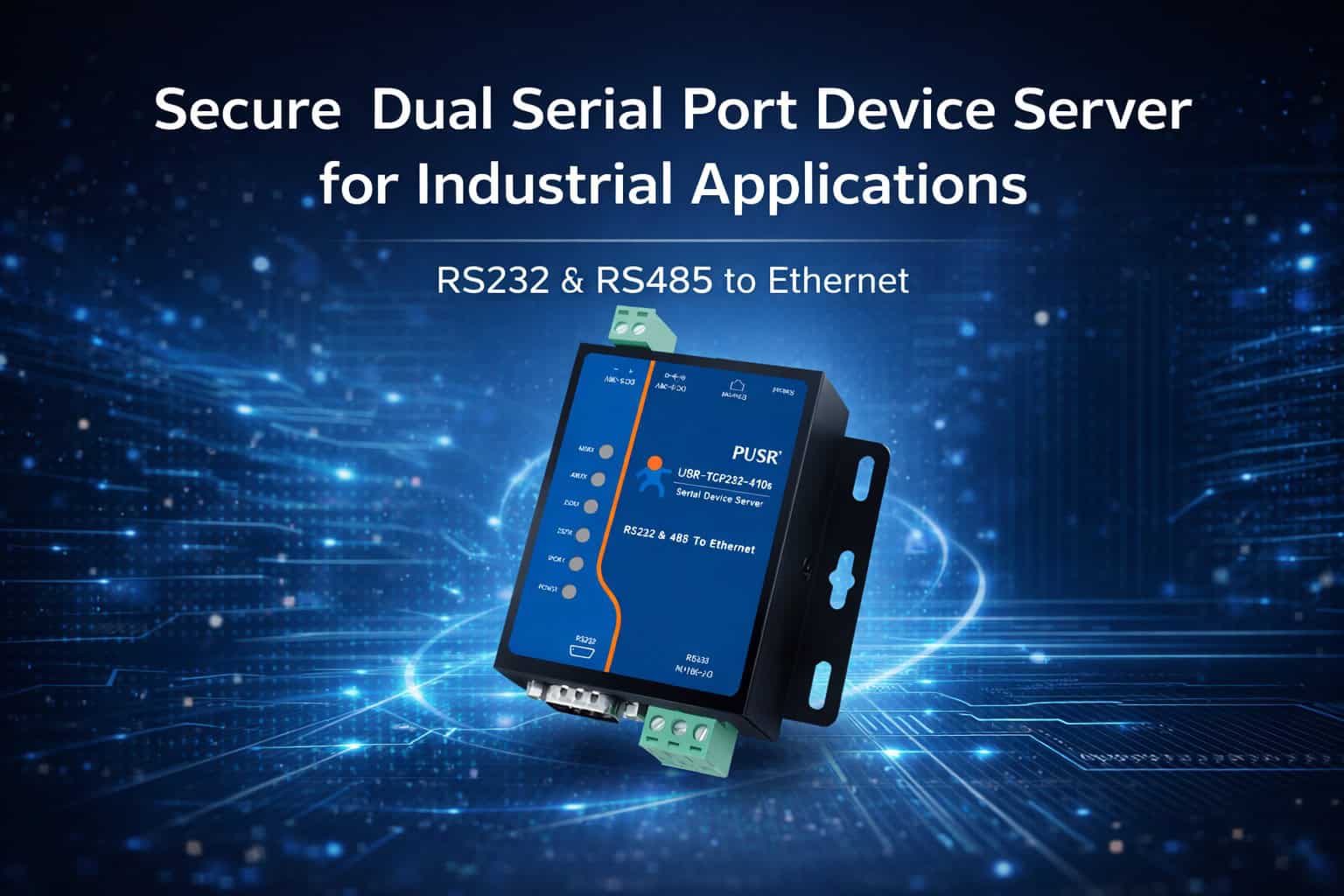
In industrial settings, connecting legacy serial devices to modern Ethernet networks is a common challenge. The USR-TCP232-410s bridges these systems, but success requires balancing practical constraints with technical requirements. Here’s how this device addresses the gap between outdated serial protocols and today’s connected environments.

Legacy serial equipment—like RS232 or RS485 devices—was built for simplicity and local connectivity. These systems struggle with scalability, distance, and compatibility with newer IoT and cloud platforms. A factory’s older PLCs or sensors, for example, might not communicate well with a central monitoring system over Ethernet. The challenge isn’t just physical connections—it’s translating data into formats modern systems understand.
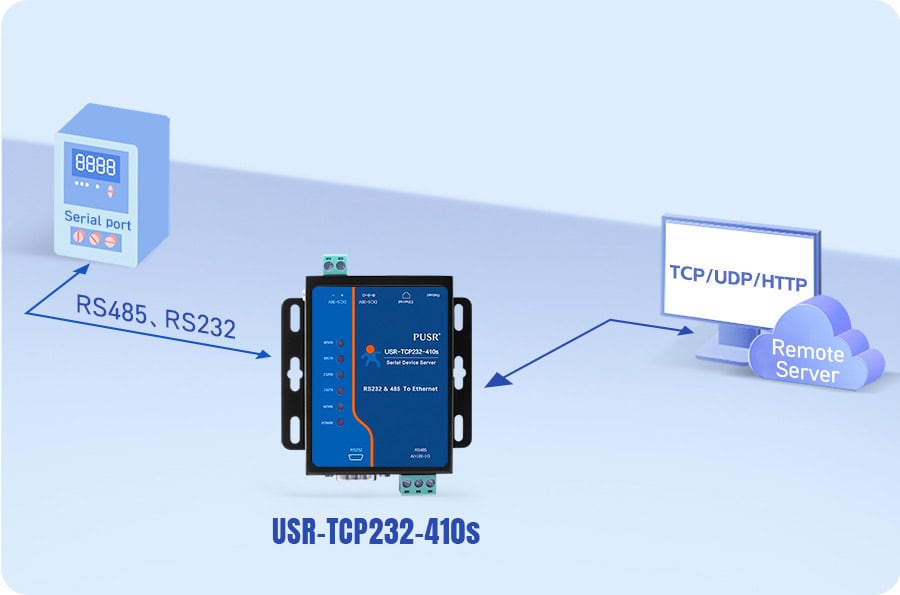
Enter the USR-TCP232-410s. This serial-to-Ethernet bridge enables two-way communication between legacy hardware and Ethernet networks. It supports Modbus RTU over serial and Modbus TCP over Ethernet, converting data formats on the fly. Engineers need fewer custom adapters, and existing infrastructure stays in place while gaining network access.
The benefits extend beyond protocol conversion. Security is critical in industrial environments, where unauthorized access could disrupt operations or compromise data. The USR-TCP232-410s includes SSL/TLS encryption and AES-256 for data protection, keeping sensitive information secure during transmission. Edge computing capabilities add value by enabling data preprocessing at the device level, reducing latency and bandwidth use—particularly useful in remote or resource-limited setups.
However, trade-offs exist. While security features are robust, they may add computational overhead or complicate setup. Setting up SSL/TLS requires managing certificates and verifying handshake times under real-time loads. Engineers must weigh these factors against the need for secure, reliable communication.

The device’s dual-port flexibility is a key strength. It supports both RS232 and RS485, making it suitable for mixed protocol environments. RS485 is common in industrial settings for its longer cable runs and noise resistance, but it requires proper differential signaling—careful cabling and termination prevent signal degradation.
The industrial-grade build is another standout feature. It operates on a wide voltage range (5–36V) and withstands electromagnetic interference (EMI), common on manufacturing floors or in outdoor installations. However, extreme temperatures—from -40°C to 85°C—might require additional thermal management in enclosures, especially in chemical plants or outdoor warehouses.
Implementation involves several key steps. First, connect serial devices to the appropriate ports and assign static IP addresses for stable network communication. The web interface simplifies configuration, letting you enable Modbus protocols and set up data output formats like JSON for compatibility with cloud platforms or databases.
Security integration is equally important. Test certificate management for SSL/TLS thoroughly, and use tools like Wireshark to validate encryption performance. While JSON output works well for IoT platforms, it might introduce latency in high-speed applications. Adjusting sampling rates or using binary formats can mitigate this, depending on your needs.
A practical deployment tip: verify compatibility with existing serial hardware. Some legacy systems require specific pinouts or baud rates that aren’t always documented. Cross-reference manufacturer guidelines or use a multimeter to check signal integrity—this prevents configuration errors.
Long-term reliability depends on regular firmware updates and security audits. Industrial environments evolve constantly, and staying ahead of vulnerabilities is crucial. Document setup details—IP configurations, protocol settings—to ensure smoother maintenance and troubleshooting.
The USR-TCP232-410s is a powerful tool for connecting legacy systems to modern networks, but success requires thoughtful planning. By addressing protocol gaps, security needs, and environmental factors, engineers can maximize value while minimizing risks. Treat this device not as a universal fix, but as part of a broader strategy for modernizing industrial infrastructure.